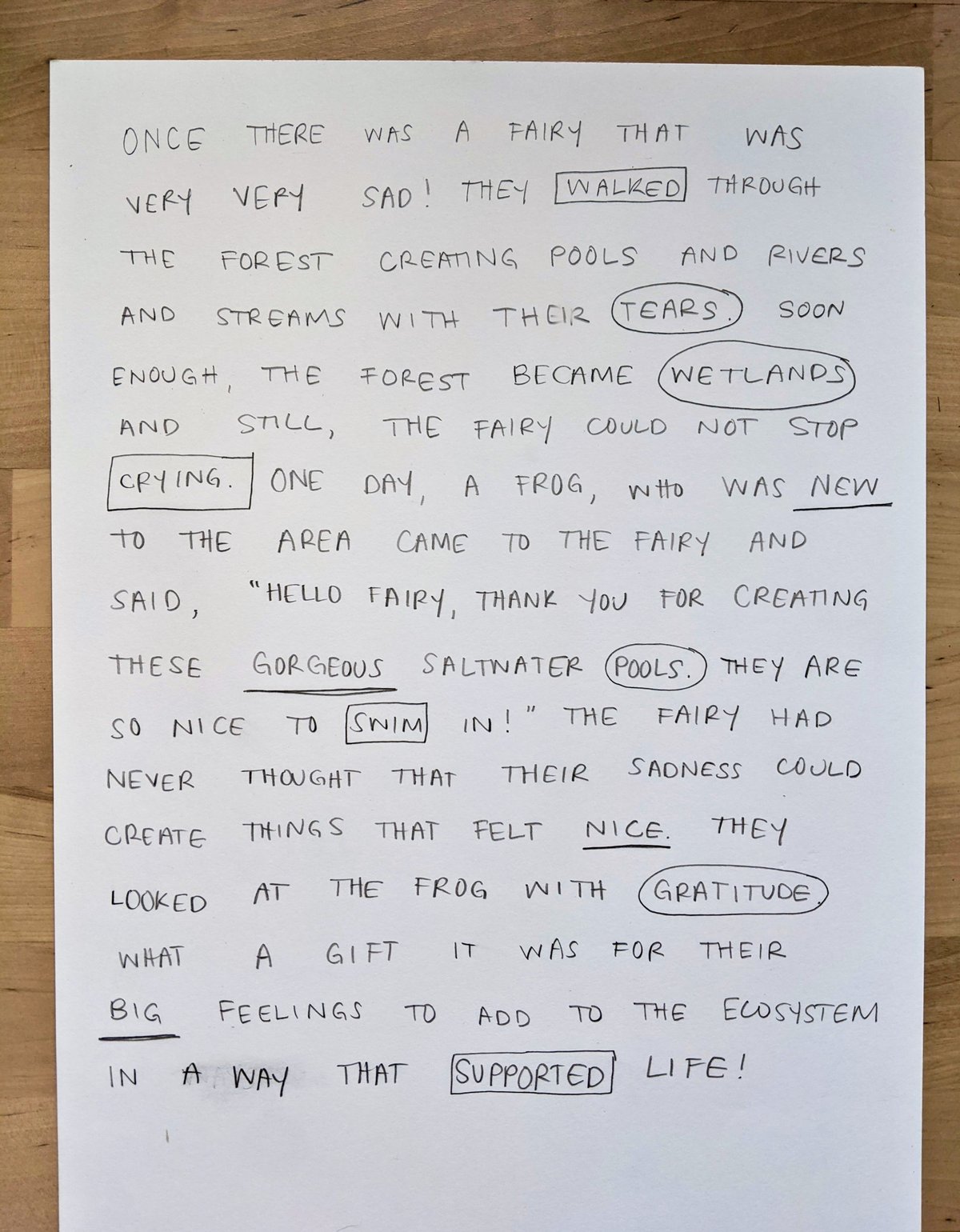
Remember the sheer delight of a Mad Libs game, where a perfectly ordinary story suddenly transforms into a hilariously nonsensical tale thanks to your wild word choices? That magic isn't confined to pre-printed pads. Imagine crafting those laugh-out-loud moments from scratch, perfectly tailored to your inside jokes, favorite themes, or educational goals. The good news? Creating your own custom Mad Libs is an incredibly rewarding, surprisingly simple, and genuinely fun activity that brings together creative writing, language arts, and plenty of laughs.
This comprehensive guide will walk you through every step, from concept to play, ensuring you can design Mad Libs that are as unique and entertaining as you are. Get ready to unleash your inner wordsmith and create endless personalized fun!
At a Glance: Your Mad Libs Making Journey
- Easy & Inexpensive: All you need is a story idea and some basic tools.
- Boost Creativity: Design unique narratives around any theme imaginable.
- Sharpen Grammar Skills: Gain a hands-on understanding of parts of speech.
- Customizable Fun: Tailor difficulty, themes, and content for any age or occasion.
- Print & Play: Simple steps to get your creations ready for hilarious game nights.
Why Bother Making Your Own Mad Libs? Beyond the Laughs!
While the primary joy of Mad Libs comes from the often-absurd stories they produce, crafting your own offers a unique blend of benefits. It's a fantastic way to enhance language arts skills for all ages, promoting a deeper understanding of sentence structure and the precise function of different word types. Think of it as a playful, interactive grammar lesson in disguise!
For writers, it's a low-pressure exercise to spark your creative writing muscles. For educators, it's an adaptable tool for lesson plans, easily customized to specific vocabulary or grammatical concepts. And for anyone looking for a unique party game or personalized gift, a custom Mad Libs story hits the mark every time. This DIY approach not only saves money but also ensures your game is infused with a personal touch that store-bought versions can't match.
Gathering Your Tools: The Essentials for Custom Mad Libs
Before diving into the creative process, let's ensure you have everything you need. The beauty of this activity is its simplicity – you likely have most of these items already.
Required Materials:
- A Word Document Program: Think Microsoft Word, Google Docs, Apple Pages, or even a basic text editor like Notepad. These are essential for typing your story and inserting the blank prompts.
- Digital Design Software (Optional, for Flair): If you want to get fancy with fonts, layouts, or graphics, programs like Canva, Adobe InDesign, or even PowerPoint can elevate your design. However, they're by no means necessary for a fantastic game.
- A Printer: Once your masterpiece is complete, you'll want to print it out for easy play.
- Paper and a Writing Utensil: For the players, to jot down their words.
- Your Creative Mind: The most important ingredient!
Your Step-by-Step Guide to Crafting Custom Mad Libs
Ready to transform a blank page into a source of endless giggles? Let's break down the process into manageable, fun steps.
Step 1: Choose Your Theme – The Heart of Your Story
Every great story needs a starting point, and for Mad Libs, that's a clear, engaging theme. This isn't just about what your story will be about; it also helps you brainstorm appropriate vocabulary and set the tone.
Why a Theme Matters: A well-chosen theme makes writing your initial story much easier. It provides boundaries, guiding your imagination rather than letting it wander aimlessly.
Theme Ideas to Get You Started:
- Everyday Life: A trip to the grocery store, a morning routine, walking the dog.
- Fantasy & Adventure: A quest to a magical land, a superhero's day off, an alien encounter.
- Holidays & Seasons: Christmas Eve, a spooky Halloween night, a summer beach day, Father's Day.
- Pop Culture: A celebrity interview, a movie review, a sports commentary.
- Personalized: An inside joke with friends, a family vacation memory, a specific birthday celebration.
Pro Tip: For beginners, start with a simple, familiar theme. As you gain confidence, you can tackle more complex or abstract ideas.
Step 2: Write or Find Your Base Story – The Un-Libbed Version
With your theme in mind, it's time to create the narrative that will eventually become your Mad Libs masterpiece. The key here is to keep it relatively short and engaging. Aim for a paragraph or two, or maybe three short paragraphs at most.
Option A: Write Your Own Story from Scratch
This is where your creativity truly shines. Based on your chosen theme, compose a simple story. Don't worry about making it poetic or profound; focus on clear sentences and a straightforward plot.
Example (Theme: A Trip to the Zoo):
"Yesterday, my family and I went to the zoo. We saw a big elephant eating peanuts. Then we watched the playful monkeys swinging through the trees. My favorite animal was the sleepy lion roaring loudly. We had a wonderful time."
Option B: Find an Existing Story or Text
If writer's block strikes, or you simply want a quick start, adapt existing text! Just ensure it's short and that you're using it for personal, non-commercial fun.
Great Sources for Base Stories:
- Short Fairy Tales or Fables: Classics like "The Three Little Pigs" or "The Tortoise and the Hare" (use a brief excerpt).
- Famous Quotes or Sayings: A humorous twist on a well-known phrase.
- Newspaper Clippings: A funny headline or a short news report.
- Song Lyrics: A verse or chorus from a popular, kid-friendly song.
- Short Poems: A simple rhyming poem.
Remember: The more engaging the original story, the funnier the Mad Libs will likely become.
Step 3: Remove Words and Add Part-of-Speech Labels – The Transformation Begins!
This is the core of creating your own custom Mad Libs. You'll go back through your story, strategically replacing words with their grammatical labels. The goal is to remove words that, when replaced by a player's random suggestion, will create a humorous or unexpected outcome.
How to Do It:
- Read Through: Read your story aloud once or twice to get a feel for the rhythm and identify key words.
- Highlight & Replace: Go sentence by sentence. Highlight a word you want to replace, then immediately replace it with its part of speech. Aim for variety! Don't just pick nouns; mix in verbs, adjectives, and adverbs.
Grammar Quick Tips for Labeling:
- NOUN: A person, place, thing, or idea (e.g., teacher, park, book, freedom).
- VERB: An action word (e.g., run, sing, eat, jump).
- ADJECTIVE: A word that describes a noun (e.g., blue, silly, enormous, fluffy).
- ADVERB: A word that describes a verb, adjective, or another adverb, often ending in "-ly" (e.g., quickly, happily, very, always).
Beyond the Basics: For More Engaging Mad Libs:
To truly elevate your game and understand different parts of speech, don't shy away from more specific labels. These provide clearer prompts for players and often lead to even funnier results. - PLURAL NOUN: (e.g., NOUN (plural) or group of animals)
- PROPER NOUN: (e.g., name of a celebrity, country)
- VERB (past tense): (e.g., VERB ending in -ed)
- VERB (ending in -ing): (e.g., GERUND)
- ADJECTIVE (comparative): (e.g., ADJECTIVE ending in -er)
- INTERJECTION/EXCLAMATION: (e.g., Wow!, Ouch!)
- ANIMAL: (e.g., type of animal)
- NUMBER: (e.g., a number)
Let's transform our zoo story:
Original: "Yesterday, my family and I went to the zoo. We saw a big elephant eating peanuts. Then we watched the playful monkeys swinging through the trees. My favorite animal was the sleepy lion roaring loudly. We had a wonderful time."
Mad Libs Draft: "Yesterday, my ADJECTIVE family and I went to the NOUN. We saw a ADJECTIVE ANIMAL eating PLURAL NOUN. Then we watched the ADJECTIVE PLURAL NOUN VERB (ending in -ing) through the PLURAL NOUN. My favorite animal was the ADJECTIVE ANIMAL VERB (ending in -ing) ADVERB. We had a ADJECTIVE time!"
Notice the variety and specificity. This makes the game much more intriguing!
Step 4: Type Up and Print Your Mad Libs – Ready for Play!
Now, transfer your Mad Libs draft into your word document program. This is where you'll create the actual fill-in-the-blank format that players will use.
Standard Blank Spaces (Google Docs, Notepad, etc.):
For most programs, simply type the part of speech followed by an underscore _ to indicate the blank line.
Example:
"Yesterday, my ADJECTIVE _______ family and I went to the NOUN _______. We saw a ADJECTIVE _______ ANIMAL _______ eating PLURAL NOUN _______. Then we watched the ADJECTIVE _______ PLURAL NOUN _______ VERB (ending in -ing) _______ through the PLURAL NOUN _______. My favorite animal was the ADJECTIVE _______ ANIMAL _______ VERB (ending in -ing) _______ ADVERB _______. We had a ADJECTIVE _______ time!"
Fancy Underlined Blanks in Microsoft Word (Pro-Level Polish):
If you're using Microsoft Word and want those classic, professional-looking underlined blanks, here's a neat trick using field codes:
- Place Cursor: Position your cursor where you want the blank to appear.
- Insert Field Code: Press
Ctrl + F9(on Mac,Cmd + F9). This will insert a pair of curly braces{ }. - Paste Command: Inside these braces, paste the following code:
EQ \x \to() - Insert Word Type: Place your part of speech (e.g., "ADJECTIVE") between the parentheses. Add spaces within the parentheses to adjust the length of the line. For example,
(ADJECTIVE )will create a longer line than(NOUN). - Toggle Field Code: Right-click the field code (
{ EQ \x \to(ADJECTIVE ) }) and select "Toggle Field Code." It will transform into a professional-looking blank line with the word type above it.
Example of the Word Field Code in action:
Imagine your Mad Libs looks like this after toggling:
Yesterday, my ADJECTIVE___________ family and I went to the NOUN__________.
Once you've formatted all your blanks, review the entire story. Ensure clarity and readability. Saving a digital copy is a smart move, allowing you to print fresh copies or modify your Mad Libs for future fun. Then, print out enough copies for your players, and you're almost ready!
Step 5: Play Your Custom Mad Libs – Let the Laughter Begin!
The moment of truth! Gather your friends or family.
How to Play:
- Choose a Reader: One person acts as the "prompter" or reader. They will hold the completed Mad Libs story.
- Collect Words: The reader goes through the story, stopping at each blank and asking the other players for a word of the specified type (e.g., "Give me an adjective!"). Players should provide words without knowing the context of the story. Encourage silly, imaginative choices!
- Fill the Blanks: The reader writes the suggested words into the corresponding blanks.
- Read Aloud: Once all blanks are filled, the reader reads the entire completed story aloud. This is where the magic happens and the hilarity ensues! You'll be amazed at how often the random words create side-splitting, nonsensical narratives.
Tip: Take turns being the reader. It's fun to both provide words and to be the one who reveals the ridiculous outcome!
Pro Tips for Making Truly Engaging Custom Mad Libs
Want your custom Mad Libs to be truly unforgettable? Here are some insights from seasoned word game creators:
- Focus on a Clear Subject: As mentioned in Step 1, a specific theme makes story writing easier and gives players a better mental framework for their word choices, even though they don't know the full context.
- Don't Overthink the Original Story: The humor in Mad Libs often comes from the absurd combinations, not the literary perfection of your initial draft. Focus on clear, simple sentences and a logical flow before you start replacing words.
- Encourage Unhinged Creativity: When playing, stress that there are no "wrong" answers. The sillier, more unexpected the word, the funnier the outcome tends to be.
- Vary Your Parts of Speech: Don't get stuck in a rut of just nouns and adjectives. Integrate verbs (past tense, -ing), adverbs, interjections, plural nouns, proper nouns, and even specific categories like "a type of food" or "a noise." The more diverse your prompts, the richer and funnier your story will be.
- Consider Your Audience: Are you playing with young children? Keep the prompts simple and the story age-appropriate. Are you with adults? You might lean into more abstract concepts or slightly more complex grammar.
- Create a Mad Libs Series: Once you've made one, you'll be hooked! Consider creating your own custom Mad Libs around a continuous theme, like "The Adventures of [ADJECTIVE] [PROPER NOUN]."
- Test It Out: Before unveiling your Mad Libs to a larger group, do a quick test run with a friend or family member. This can help you catch any confusing prompts or realize a blank might work better as a different part of speech.
Common Questions & Troubleshooting Your Custom Mad Libs
Even with simple steps, a few questions might pop up. Here's a quick FAQ to help you out:
Q: My story feels too long. How long should a Mad Libs story be?
A: Generally, keep it to one to three paragraphs. The goal is quick, punchy humor. If it's too long, players might get bored, and the "reveal" takes too much time. You can always break a longer story into multiple Mad Libs pages!
Q: What if I can't think of a story?
A: Reread Step 2! Borrowing snippets from public domain fairy tales, funny news headlines, or even simply describing a routine like "getting ready for school" can be a great starting point. The beauty of the Mad Libs format is that the original story is just a skeleton.
Q: How do I make my Mad Libs harder or easier?
A:
- Easier: Use very common parts of speech (noun, verb, adjective) and give hints during play if needed. Keep sentences simple.
- Harder: Incorporate more obscure parts of speech (interjection, gerund, specific adverbs), use longer sentences, and offer no hints when collecting words. You can even challenge players to use words they've never heard of!
Q: Can I use Mad Libs for educational purposes?
A: Absolutely! DIY Mad Libs are a fantastic, hands-on tool for teaching grammar, vocabulary, and creative writing. Tailor the theme to a school subject (e.g., a Mad Libs about historical events or scientific processes), or focus on specific parts of speech your students are learning. It's a fun way to make learning feel like a game!
Q: I have a great idea for a Mad Libs, but I'm worried about the word count or getting stuck. What should I do?
A: Don't let perfection be the enemy of good! The most important thing is to start. Begin with a simple theme, write a very short draft, and then just start replacing words. You can always refine it. And remember, the humor often comes from the unexpected, so sometimes the less "perfect" the original story, the funnier the outcome!
Take the Plunge: Your Next Step in Wordplay Fun
Creating your own custom Mad Libs is an incredibly rewarding endeavor, transforming a simple piece of writing into an interactive experience filled with laughter and learning. Whether you're aiming to entertain friends at a party, create a personalized gift, or simply explore the power of language, the steps are straightforward and the potential for fun is limitless.
So, fire up your word processor, pick a theme, and start crafting your story. In no time, you'll have a unique Mad Libs game that's truly your own. If you're looking for more inspiration or want to experiment with generating ideas, you can always explore a create your own mad lib online. But nothing quite beats the satisfaction of building it from the ground up. Happy creating, and prepare for endless fits of giggles!