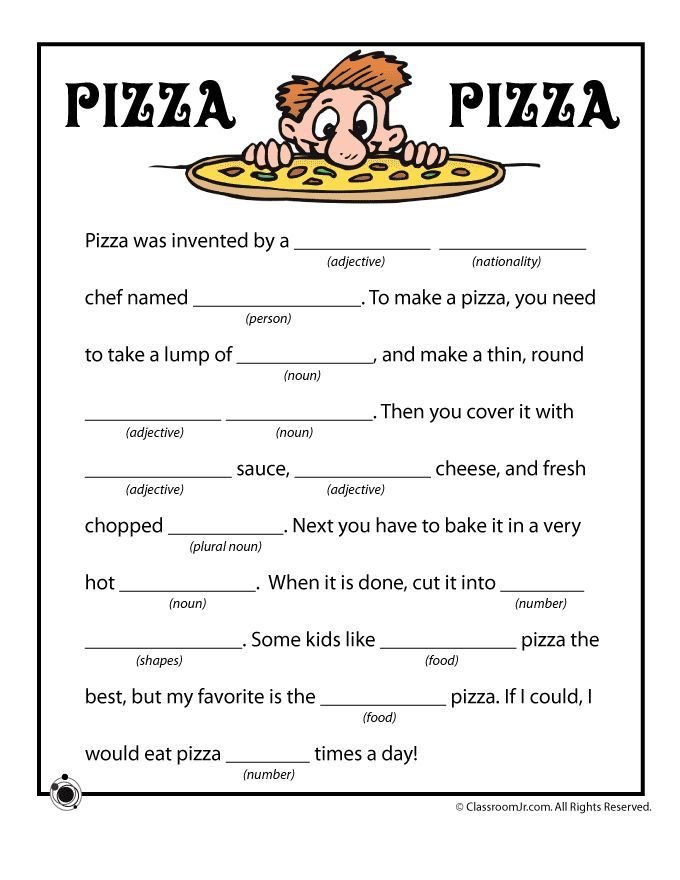
Imagine a gathering where the most mundane story transforms into a side-splitting saga, fueled by outrageous nouns, nonsensical verbs, and adjectives that defy logic. If you're looking to inject that kind of spontaneous hilarity into your next get-together, classroom activity, or just a quiet evening with friends, then delving into the world of Funny Mad Libs: Prompts, Themes & Examples is your golden ticket to guaranteed laughs. This isn't just a word game; it's an art form, a linguistic playground where absurdity reigns supreme and creativity blossoms in the most unexpected ways.
At a Glance: Your Guide to Mad Libs Mayhem
- What are Mad Libs? A classic word game where players fill in blanks in a story (without seeing the full context!) using specific parts of speech, then read the hilariously altered story aloud.
- Why are they so funny? The unexpected juxtaposition of unrelated words creates comedic gold, often turning a serious narrative into utter nonsense.
- How to play: One person asks for words (nouns, verbs, adjectives, adverbs), another supplies them, and then the story is read for laughs.
- Best themes: Look for scenarios with inherent structure that can be easily warped, like dramatic scenes, fantastical adventures, or everyday routines.
- Word Power: The key to true hilarity lies in choosing words that are either highly specific and odd, or wonderfully generic and out-of-place.
- Ready-to-use examples: We'll provide a variety of prompts and stories to get you started immediately.
- Create your own: Learn the simple steps to craft personalized Mad Libs stories for any occasion.
The Irresistible Charm of Fill-in-the-Blank Fun
At its core, Mad Libs is a brilliantly simple concept: one person, the "prompter," asks another, the "filler," for specific types of words – a noun, a verb, an adjective, an adverb, and so on. Crucially, the filler doesn't know the story's context, only the grammatical category. Once all the blanks are filled, the story is read aloud, inevitably resulting in a cascade of laughter as mundane narratives morph into nonsensical masterpieces.
This classic word game isn't just for kids; it’s a surprisingly sophisticated tool for vocabulary practice, fostering creativity, and — most importantly — generating pure, unadulterated fun across all age groups. The magic happens in the collision of intention and outcome: a perfectly normal sentence becomes an absurdist poem when you substitute "fluffy" for "brave" or "Zamboni" for "car." It’s a low-stakes, high-reward activity that always delivers.
Crafting Comedy: Why Mad Libs Make Us Laugh
The humor in Mad Libs stems from several psychological and linguistic factors:
- Unexpected Juxtaposition: Our brains crave order and meaning. When a word that logically shouldn't be there suddenly appears, the clash creates a cognitive surprise that often manifests as laughter. Imagine "The [adjective] queen rode her [noun] through the park." If you fill in "smelly" and "spaghetti noodle," the absurdity is instant.
- Violation of Expectations: We anticipate a story to follow a certain narrative path. Mad Libs deliberately derails this expectation, turning a familiar scene into an unpredictable, often outrageous, adventure.
- Shared Experience: Reading a Mad Libs story aloud turns it into a mini-performance. The shared anticipation, the reveal, and the collective burst of laughter create a powerful bonding experience.
- Innocent Mischief: There's a playful subversion in taking a structured story and intentionally (or unintentionally, as the filler) making it ridiculous. It allows for a safe, creative outlet for silly thoughts.
- Simplicity: The rules are so easy to grasp that anyone can participate, removing barriers to entry and allowing everyone to contribute to the comedic chaos.
The Mechanics of Mad Libs: How to Play and Prompt
Playing Mad Libs is straightforward, but a few pointers can elevate the experience from merely amusing to outrageously funny.
The Basic Steps
- Prepare Your Story: Have a Mad Libs story ready, with all the blanks clearly marked with the required part of speech (e.g., [noun], [verb - past tense], [adjective], [adverb]).
- Gather Your Players: You need at least two: a "Prompter" and one or more "Fillers."
- Prompt for Words: The Prompter asks the Filler(s) for words according to the blanks, without revealing the story's content. Write down each word as it's given.
- Fill the Blanks: Once all the words are collected, the Prompter inserts them into the story.
- Read Aloud: The moment of truth! Read the complete, newly personalized story aloud. Prepare for laughs.
Tips for the Prompter
Your role is crucial in guiding the humor.
- Be Clear: State the part of speech clearly ("Give me a plural noun," "I need an adverb ending in -ly").
- Encourage Creativity: If a filler struggles, offer a small nudge without revealing context. "Think of a really silly adjective," or "What's an animal that would never be in a castle?"
- Manage Expectations: Remind fillers that no answer is "wrong." The more unexpected, the funnier!
- Keep a Straight Face: Part of the fun is your stoic demeanor while collecting the words, contrasting with the impending hilarity.
Tips for the Filler
You hold the power to shape the story's comedic destiny.
- Go Wild: Don't hold back. Instead of "dog" for a noun, try "Zamboni" or "box of tissues." Instead of "walk," try "yodel" or "slurp."
- Think Specific & Absurd: A "shiny, red apple" is fine, but a "grumpy, radioactive eggplant" is gold.
- Consider Context (Generally): While you don't know the story's context, you can think of the general type of word. If asked for an adjective, you know it describes something.
- Embrace the Unexpected: The beauty of Mad Libs is in the surprise. The weirder your words, the better.
Need a quick way to get started or experiment with different prompts? An online Mad Libs generator can be a fantastic resource for instant fun, whether you're playing solo or with a group.
The Best Themes for Truly Funny Mad Libs
While any story can become a Mad Lib, certain themes lend themselves particularly well to comedic distortion. The key is to pick scenarios that have a clear structure but enough flexibility for bizarre words to twist them into new, hilarious shapes.
1. Dramatic Scenes & Epic Adventures
Stories with a narrative arc, a problem, and a resolution are ripe for Mad Libs. Think about classic fairy tales, heroic quests, or even a mundane trip to the grocery store turned epic.
- Why it works: The contrast between the grandiosity of the plot and the absurdity of the chosen words creates immediate humor.
- Examples: A knight battling a [adjective] dragon, a secret agent on a [adverb] mission, or a school play gone [adjective]. The ground truth highlighted integrating Mad Libs with drama, dividing a group into pairs, each creating unique scenes by filling in words. This method emphasizes the comedic potential of shared dramatic readings.
2. Everyday Routines Gone Wild
Take a common activity – getting ready for school, cooking dinner, walking the dog – and let the words transform it into an outlandish event.
- Why it works: We all relate to these routines, making the deviation from the norm even funnier.
- Examples: My morning routine involves [verb -ing] my [plural noun] and then [adverb] eating a [adjective] breakfast, or making a [adjective] sandwich with [unusual ingredient noun].
3. Wild Science Experiments & Peculiar Inventions
These themes naturally invite strange ingredients, processes, and outcomes.
- Why it works: The scientific language, when paired with absurd words, becomes instantly comical.
- Examples: Professor [silly noun] invented a machine that could [verb] [plural noun] with [adverb] precision, producing [adjective] [plural noun] every time.
4. Travel & Vacation Disasters
Describe a trip to an exotic location or a local landmark, then let the words inject chaos.
- Why it works: Travel stories often have inherent humor, and Mad Libs amplifies it.
- Examples: On my trip to [place], I saw a [adjective] [animal noun] [verb -ing] [adverb] in front of the [landmark noun].
5. Animal Antics & Pet Peculiarities
Animals doing human-like things or behaving in utterly bizarre ways are always a hit.
- Why it works: We project personalities onto animals, making their "actions" (as dictated by Mad Libs) especially funny.
- Examples: My [adjective] cat, [name], loves to [verb] on top of the [noun] while wearing a [adjective] [another noun].
Essential Word Lists for Mad Libs Mastery
The backbone of any good Mad Libs experience is a robust vocabulary, particularly when it comes to the core parts of speech. Don't get stuck! Having a mental (or physical!) list of options at the ready can significantly enhance the humor. Many players find it helpful to have a dedicated word list organizer to jot down favorite silly words.
Nouns: The Stuff of Life (and Laughter)
Nouns are your characters, objects, and places. The fun comes from injecting specific, unexpected, or plain ridiculous nouns into the story.
- Think beyond the obvious: Instead of "dog," try "Zamboni," "can of beans," "tin can," "rocking chair," "snack cake," "laser pointer," "jar of dirt," "flour tortilla," "toilet bowl," "printer," "fire extinguisher," "stuffed animal," "spaghetti noodle," "dragonfly," "monster truck."
- People/Roles: "ballerina," "superhero," "teacher," "clown," "pirate," "monster," "elf," "Santa."
- Abstract: "bravery," "sadness," "imagination." (These can be very funny when used concretely).
Verbs: Action! (and Absurdity)
Verbs describe what's happening. The more dynamic and unusual, the better.
- Unexpected actions: Instead of "run," try "yodel," "slurp," "wiggle," "pounce," "crawl," "shuffle," "tickle," "whisper," "ponder," "sew," "code," "dust," "cuddle," "whine," "whimper," "skate," "gather."
- Dramatic verbs: "explode," "giggle," "scream," "pout," "float," "plummet."
Adjectives: Colorful Descriptions (and Comedic Contrast)
Adjectives add detail. They're fantastic for creating hilarious mismatches.
- Beyond basic descriptors: Instead of "good," try "gnarly," "groggy," "hilarious," "hyper," "inactive," "jealous," "loquacious," "bizarre," "blissful," "calculated," "candid," "strange," "peculiar," "outlandish," "eccentric," "radiant," "shameless," "serene."
- Sensory: "smelly," "squishy," "grumpy," "gleeful," "furry," "sticky," "velvety."
Adverbs: How Things Happen (Hysterically)
Adverbs modify verbs, adjectives, or other adverbs. They describe how something is done.
- Exaggerated actions: Instead of "quickly," try "vivaciously," "foolishly," "wildly," "slyly," "stupidly," "hostilely," "dejectedly," "achingly," "annoyingly," "boastfully," "jealously," "joylessly," "miserably," "painfully," "rudely," "tediously," "lazily," "resoundingly," "shrilly," "thunderously," "crazily," "defiantly."
- Absurdist placement: Imagine "The chicken danced [adverb]." If you put "elegantly" or "awkwardly," the humor is immediate.
When you're trying to brainstorm words, it can be really helpful to have a tool that provides word suggestions or even a full Mad Libs generator to get the creative juices flowing. Don't be afraid to keep a personal list of favorite funny words handy!
Funny Mad Libs: Prompts and Examples to Get You Started
Here are some ready-to-use Mad Libs examples. Feel free to substitute your own words for even more unique results!
Example 1: A Day at the [Silly Noun] Park
"Today was a wonderful day at the [adjective] [silly noun] Park. My friend, [person's name], and I decided to [verb] the new [adjective] slide. It was so [adjective] that we almost [verb - past tense] our [plural noun]! Afterwards, we saw a [animal noun] wearing a [adjective] [clothing item noun] and [adverb] singing a [adjective] song. We tried to [verb] with it, but it just [verb - past tense] its [body part noun] and [verb - past tense] away. What a [adjective] experience!"
Example 2: My [Adjective] New Pet
"I just got the most [adjective] new pet! It's a [animal noun] with [adjective] fur and a [adjective] [body part noun]. Every morning, it loves to [verb] its [plural noun] and then [adverb] [verb - present participle] around the [room noun]. Its favorite food is [food noun], but only if it's served on a [adjective] [kitchen item noun]. Sometimes, it tries to [verb] my [household item noun], which makes me feel very [emotion adjective]. But mostly, it's just a [positive adjective] and [adjective] companion!"
Example 3: The [Adjective] Science Experiment
"Professor [silly name] was hard at work in the [adjective] laboratory. He was attempting to turn a common [noun] into a [adjective] [another noun]. First, he had to [verb] exactly [number] [plural noun] and mix them with [adjective] [liquid noun]. Then, he [adverb] poured the concoction into a [color] [container noun]. Suddenly, the mixture began to [verb] and glow with a [adjective] light! Out popped a tiny, [adjective] [animal noun] that immediately started to [verb] [adverb]. The professor exclaimed, 'My research is [adjective]!' and celebrated by [verb - present participle] a [adjective] [food noun]."
Example 4: A [Adjective] Trip to the Grocery Store
"My mission to the grocery store was unexpectedly [adjective]. I needed to buy [plural noun], [type of food] and some [adjective] [vegetable noun]. As I pushed my [adjective] shopping cart, I noticed a [animal noun] [adverb] [verb - present participle] near the [produce noun] section. It was wearing a tiny [clothing item noun]! I tried to [verb] it, but it just [verb - past tense] its [body part noun] and [adverb] ran away. When I finally reached the checkout, the cashier, who looked very [adjective], accidentally scanned my [personal item noun] instead of my [food noun]. What a [adjective] adventure!"
Creating Your Own Funny Mad Libs: A Quick Guide
If you've played a few and are itching to craft your own, it's surprisingly simple.
Step 1: Choose Your Story Idea
Start with a simple narrative. It could be about anything: a visit to the dentist, a camping trip, a news report, a letter to a friend, or a recipe. The more structured the original story, the easier it is to Mad Lib-ify.
Step 2: Write Your Base Story
Draft a complete story, as if you were writing normally. Aim for 3-5 short paragraphs for a good length.
Example Base Story Idea: "I went to the beach today. The sun was hot and the sand was soft. I built a sandcastle and swam in the ocean. Later, I ate an ice cream and watched the sunset. It was a perfect day."
Step 3: Identify Parts of Speech to Replace
Now, go through your story and pick out words you want to replace with blanks. Focus on nouns, verbs, adjectives, and adverbs for maximum humor. Don't overdo it – leave enough context for the story to still be vaguely decipherable.
Example Transformation:
"I went to the [noun - place] today. The [noun] was [adjective] and the [noun] was [adjective]. I [verb - past tense] a [noun] and [verb - past tense] in the [noun]. Later, I [verb - past tense] a [adjective] [noun] and [adverb] watched the [noun]. It was a [adjective] day."
Step 4: Create Your Prompt List
Make a separate list of the parts of speech you need, in order. This is what you'll read to your fillers.
- Noun (place)
- Noun
- Adjective
- Noun
- Adjective
- Verb (past tense)
- Noun
- Verb (past tense)
- Noun
- Verb (past tense)
- Adjective
- Noun
- Adverb
- Noun
- Adjective
Step 5: Test and Refine
Play your Mad Libs! See which blanks generate the most laughs and which might need tweaking. Sometimes, changing a [noun] to a [plural noun] or a [verb] to a [verb -ing] can unlock new comedic potential. For quick iterations, using an online Mad Libs creation tool can streamline this process.
Avoiding Common Pitfalls for Maximum Hilarity
Even with the best intentions, some Mad Libs can fall flat. Here's how to ensure yours are always a hit:
- Don't Over-Blank: Too many blanks can make a story incoherent and difficult to read. Aim for a good balance of original words and blanks.
- Vary Parts of Speech: Don't just ask for nouns. A good mix of adjectives, adverbs, and verbs creates a richer, funnier story.
- Avoid Leading Questions: When prompting, don't accidentally reveal clues about the story. For example, asking for "a scary adjective" might hint at a monster story. Just ask for "an adjective."
- Encourage Specificity: While "cat" is a noun, "fluffy trampoline" or "miniature Zamboni" for a noun is much funnier. Encourage fillers to think outside the box.
- Read with Enthusiasm: The performance aspect is key. Read the completed story with gusto, emphasizing the funny word choices.
Beyond the Game: The Unexpected Benefits of Mad Libs
While the primary goal of Mad Libs is fun, it offers several hidden benefits:
- Vocabulary Expansion: Constantly thinking of different words for specific grammatical categories naturally expands a player's vocabulary. This is especially true when players reach for unusual or descriptive words to maximize humor. The extensive word lists for nouns, verbs, adverbs, and adjectives provided by resources are excellent for aiding this.
- Grammar Reinforcement: It's a playful way to solidify understanding of parts of speech. Knowing the difference between an adjective and an adverb becomes second nature when the wrong choice can ruin the joke.
- Creative Writing Warm-up: For writers, Mad Libs can be a fantastic way to break through writer's block or experiment with unexpected phrasing and imagery. It encourages thinking outside conventional narrative structures.
- Social Bonding: As mentioned, the shared experience of creating and reading a funny Mad Lib fosters connection and camaraderie, making it an excellent icebreaker or party game.
For those who want to take their word game seriously, printing and filling a Mad Libs word list organizer with preferred words, then laminating it for repeated use, can turn vocabulary building into an ongoing, engaging activity. It acts as a handy grammar tool and creative aid.
Your Next Hilarious Adventure Awaits
Funny Mad Libs: Prompts, Themes & Examples aren't just a nostalgic game; they're a timeless tool for sparking joy, creativity, and uproarious laughter. Whether you're improvising with friends, facilitating a classroom activity, or simply unwinding with a chuckle, the simple act of filling in the blanks holds boundless potential for comedic genius. So grab a pen, gather your wits (or lack thereof!), and get ready to transform the ordinary into the extraordinary, one perfectly absurd word at a time. Your funniest story is just a few [adjective] nouns and [adverb] verbs away!